Word4Today

Word4TodayWord4TodayWord4Today
  • Sign In
  • Create Account

  • Orders
  • My Account
  • Signed in as:

  • filler@godaddy.com


  • Orders
  • My Account
  • Sign out

  • Home
  • Time to Repent
  • The Christian Life
  • Concerning the Church
  • Faith of God's Saints
  • married4life.net
  • More
    • Home
    • Time to Repent
    • The Christian Life
    • Concerning the Church
    • Faith of God's Saints
    • married4life.net

Word4Today

Word4TodayWord4TodayWord4Today

Signed in as:

filler@godaddy.com

  • Home
  • Time to Repent
  • The Christian Life
  • Concerning the Church
  • Faith of God's Saints
  • married4life.net

Account


  • Orders
  • My Account
  • Sign out


  • Sign In
  • Orders
  • My Account

The Act of Apostasy

(Praying that nobody would Go there)

To the Reader: This article talks about apostacy which I know may be a difficult subject, especially for those who may know someone who has turned away from following Christ. However, that being said, we must stand on scripture alone. This would be true even when we are faced with those passages that we’re uncomfortable with. Therefore, I am confident that through God’s word, we can grow and mature as we study His word. Therefore let's: "Study to shew thyself approved unto God, a workman that needeth not to be ashamed, rightly dividing the word of truth." (2 Timothy 2:15). Amen


Once Saved, Always Saved?

“It is impossible for those who have once been enlightened, who have tasted the heavenly gift, who have shared in the Holy Spirit, who have tasted the goodness of the word of God and the powers of the coming age and who have fallen away, to be brought back to repentance. To their loss they are crucifying the Son of God all over again and subjecting him to public disgrace.” (Hebrews 6:4-6 NIV)


As mentioned above, this is one of those topics that I find hard to discuss because it involves one’s eternal security. Also, it’s one that can be so abused and misunderstood as well. However, by carefully studying God’s word we can rightly put this into proper perspective. So, let’s start with that passage quoted above. Here we read of a warning against believers who turn away from Christ (commit apostacy). So, if after experiencing the Holy Spirit and the goodness of God they again fall back into the world by renouncing Christ, they have no more hope of repentance. This again is a very heavy warning for us to always keep the faith and not turn away from the hope we have in Jesus Christ.


Now, we again see this also to be true a few chapters over where we read: “For if we sin willfully after we have received the knowledge of the truth, there no longer remains a sacrifice for sins, but a certain fearful expectation of judgment, and fiery indignation which will devour the adversaries. Anyone who has rejected Moses' law dies without mercy on the testimony of two or three witnesses. Of how much worse punishment, do you suppose, will he be thought worthy who has trampled the Son of God underfoot, counted the blood of the covenant by which he was sanctified a common thing, and insulted the Spirit of grace? For we know Him who said, "Vengeance is Mine, I will repay," says the Lord. And again, "The LORD will judge His people." It is a fearful thing to fall into the hands of the living God. (Hebrews 10:26-31 NKJV)


So, if a true confessing Christian rejects Jesus Christ and thus fall back into a life of sin, he could become an enemy and blasphemer of God and thus face his wrath on the day of judgment. Now, I know that there may be some who have a head knowledge of who Jesus is and may even claim to believe in him. However, these same individuals may not have repented of their sins nor given their heart fully over to him. In other words, there not truly born again. So, I personally wouldn’t include these in those passage above. So, they could someday fully give their life over to Jesus Christ. Which should be our hope for them.


Now, I do know that the book of Romans says that nothing can separate us from the love of God in Christ Jesus.” (Romans 8:31-39) And even though this is true, I don’t believe it means what some teachers claim it says. For I see it to mean that there is nothing that can come against our own will and force us away from God? For as long as we put our hope and trust in Jesus, we cannot be separated from God. We see the same thing to be true where Jesus said: “My sheep hear my voice, and I know them, and they follow me. I give them eternal life, and they will never perish, and no one will snatch them out of my hand. My Father, who has given them to me, is greater than all, and no one is able to snatch them out of the Father’s hand.” (John 10:27-29 ESV) So, did you notice that Jesus said: “My sheep here my voice” and that “they follow me.” So, it’s those that hear and follow Jesus that are kept from the evil one which we know is the Devil. So, doesn’t this simply mean that those who hear and follow Jesus cannot lose their salvation? I do believe so. But on the other hand, those who once prophesied Christ and yet have willingly walk away from him are no longer saved. And unfortunately, I have seen this happen with a few people I personally knew.


What Happens if We Sin?

“My little children, I am writing you these things so that you may not sin. But if anyone does sin, we have an advocate with the Father - Jesus Christ the righteous one. He himself is the atoning sacrifice for our sins, and not only for ours, but also for those of the whole world.” (1 John 2:1-2 CSB)


Now, even though we should not sin as Christian, there may be times that a fellow believer falls or makes a mistake. However, since they haven’t denied Christ, they are still saved. For just as we read above, we have scriptures that show this to be true. For: “If we confess our sins, he is faithful and just to forgive us our sins, and to cleanse us from all unrighteousness.” (1 John 1:9 ESV) And let’s remember that King David also committed sin and yet God forgave him when he repented of his adultery.


Also, Paul the apostle went through some struggles himself. For we read in Romans 7:21-25, “I find then a law, that, when I would do good, evil is present with me. For I delight in the law of God after the inward man: But I see another law in my members, warring against the law of my mind, and bringing me into captivity to the law of sin which is in my members. O wretched man that I am! who shall deliver me from the body of this death? I thank God through Jesus Christ our Lord. So then with the mind I myself serve the law of God; but with the flesh the law of sin.” (Romans 7:21-25) And what was Paul’s outcome toward the end of his life? Well, he said: “I have fought a good fight, I have finished my course, I have kept the faith: Henceforth there is laid up for me a crown of righteousness, which the Lord, the righteous judge, shall give me at that day: and not to me only, but unto all them also that love his appearing.” (2 Timothy 4:7-8) Yes, Paul “kept the faith” and thus he received a “crown of righteousness.”


So again, as long as we keep the faith and cling to our Lord Jesus Christ, we will not lose our salvation. Therefore, in light of those stern warnings mention above, let’s keep: “Looking unto Jesus the author and finisher of our faith; who for the joy that was set before him endured the cross, despising the shame, and is set down at the right hand of the throne of God.” (Hebrews 12:2). So then, brothers and sisters in Christ: “Therefore do not throw away your confidence, which has a great reward. For you have need of endurance, so that when you have done the will of God you may receive what is promised. For, ‘Yet a little while, and the coming one will come and will not delay; but my righteous one shall live by faith, and if he shrinks back, my soul has no pleasure in him.’ But we are not of those who shrink back and are destroyed, but of those who have faith and preserve their souls.” (Hebrews 10:35-39 ESV)


So, did you notice that it says “when you have done the will of God.” And we know it’s God’s will that we keep the faith and bear much fruit by abiding in our Lord and Savior Jesus Christ. For in doing so, we will “receive what is promised” which we know is eternal life with him. Amen.


In Closing

So then, my brothers and sisters in Christ, “Let's hold firmly to the confession of our hope without wavering, for He who promised is faithful; and let's consider how to encourage one another in love and good deeds, not abandoning our own meeting together, as is the habit of some people, but encouraging one another; and all the more as you see the day drawing near.” (Hebrews 10:23-25 NASB20)


So, we are to daily be encouraging each other in our walk with Christ. Therefore: “Take care, brothers, lest there be in any of you an evil, unbelieving heart, leading you to fall away from the living God. But exhort one another every day, as long as it is called "today," that none of you may be hardened by the deceitfulness of sin.” (Hebrews 3:12-13 ESV) And let’s do just that, always holding on and looking to our Lord and Savior, Jesus Christ. Amen.


Now, let’s consider some other scriptures below concerning this topic:


  • “I am the true vine, and my Father is the vinedresser. Every branch in me that does not bear fruit he takes away, and every branch that does bear fruit he prunes, that it may bear more fruit. ... If anyone does not abide in me he is thrown away like a branch and withers; and the branches are gathered, thrown into the fire, and burned.” (John 15:1-2, 6 ESV)
  • “You will say then, ‘Branches were broken off so that I might be grafted in.’ Quite right, they were broken off for their unbelief, but you stand by your faith. Do not be conceited, but fear; for if God did not spare the natural branches, He will not spare you, either. See then the kindness and severity of God: to those who fell, severity, but to you, God's kindness, if you continue in His kindness; for otherwise you too will be cut off. And they also, if they do not continue in their unbelief, will be grafted in; for God is able to graft them in again.” (Romans 11:19-23 NASB20)
  • “Do you not know that those who run in a race all run, but one receives the prize? Run in such a way that you may obtain it. And everyone who competes for the prize is temperate in all things. Now they do it to obtain a perishable crown, but we for an imperishable crown. Therefore I run thus: not with uncertainty. Thus I fight: not as one who beats the air. But I discipline my body and bring it into subjection, lest, when I have preached to others, I myself should become disqualified.” (1 Corinthians 9:24-27 NKJV)
  • “Until I come, devote yourself to the public reading of Scripture, to exhortation, to teaching. Do not neglect the gift you have, which was given you by prophecy when the council of elders laid their hands on you. Practice these things, immerse yourself in them, so that all may see your progress.” (1 Timothy 4:13-15 ESV)
  • “For if after they have escaped the pollutions of the world through the knowledge of the Lord and Saviour Jesus Christ, they are again entangled therein, and overcome, the latter end is worse with them than the beginning. For it had been better for them not to have known the way of righteousness, than, after they have known it, to turn from the holy commandment delivered unto them. But it is happened unto them according to the true proverb, The dog is turned to his own vomit again; and the sow that was washed to her wallowing in the mire.” (2 Peter 2:20-22)
  • “Create in me a clean heart, O God; and renew a right spirit within me. Cast me not away from thy presence; and take not thy holy spirit from me. Restore unto me the joy of thy salvation; and uphold me with thy free spirit.” (Psalm 51:10-12 KJV)
  • “But when the righteous turneth away from his righteousness, and committeth iniquity, and doeth according to all the abominations that the wicked man doeth, shall he live? All his righteousness that he hath done shall not be mentioned: in his trespass that he hath trespassed, and in his sin that he hath sinned, in them shall he die.” (Ezekiel 18:24 KJV)


God bless you as you seek to do his well. Aman


(Note: Bible text used have been abbreviated according to the version that was used. This is for you the reader to know which version was used in order for you to go read it for yourselves.


  • KJV =      King James Version
  • ESV =      English Standard Version
  • NKJV =      New King James Version
  • NIV =      New International Version
  • CSB =      Christian Standard Bible


Back to the Top

Get Involved in Our Youth Group

Our youth group is a vibrant and active community of young people who come together to learn, grow, and have fun. From weekly meetings to special events and mission trips, there is always something exciting happening in our youth group. Join us and get involved!

Learn More

What Wine did Jesus Make?

(Can We Solve this Confusion)

Welch’s Grape Juice?

“When the head steward tasted the water that had been turned to wine, not knowing where it came from (though the servants who had drawn the water knew), he called the bridegroom and said to him, ‘Everyone serves the good wine first, and then the cheaper wine when the guests are drunk. You have kept the good wine until now!’” (John 2:9-10 NET)


Drinking wine is one of those topics that has been so misunderstood by sincere brothers and sisters in Christ. For there are some who believe that Jesus made ordinary grape juice at the wedding in Cana. And on the other hand, others say Jesus not only made fermented wine but drank it as well. So, can we really find any truth in all this? Are there any passages in our bibles that can put this debate to rest? Well, let’s dive into God’s word and find out.


So, for starters, let look at John’s gospel above where Jesus saved a wedding that was about to go dry. For part way through awedding that both he andhis mother Mary as well as his disciples were attending; they ended up running out of wine. And when Mary got Jesus involved, he ended up making wine from plain old water. And what happened next? Well, we read above that the head steward said the wine that Jesus made was “good wine.” And not only that, but he admitted that the “good wine” is one that can get the guests drunk as well. I say this because the Greek word for drunk in that passage above is “methyo,” which means “intoxication.”


Clear the Wine Debate

Now, let’s look at another passage that may help clear up this wine debate. “Now when you come together at the same place, you are not really eating the Lord’s Supper. For when it is time to eat, everyone proceeds with his own supper. One is hungry and another becomes drunk. Do you not have houses so that you can eat and drink? Or are you trying to show contempt for the church of God by shaming those who have nothing? What should I say to you? Should I praise you? I will not praise you for this!” (1 Corinthians 11:20-22 NET) So, we can see that they did serve fermented wine during communion because it made some of them drunk. For again, we see the same Greek word “methyo” being used for drunkenness as before.


Therefore, shouldn’t this stop the confusion of whether or not Jesus made fermented wine? Also, this should show that the consumption of alcoholic beverages is not wrong? For not only do we have Jesus himself making fermented wine at a wedding, but we see it being served not only during communion, but at the Passover as well. For we read: “Then he took a cup, and when he had given thanks, he gave it to them, saying, “Drink from it, all of you. This is my blood of the covenant, which is poured out for many for the forgiveness of sins”.” (Matthew 26:27-28 NIV)


Being Filled with the Spirit

“And don't get drunk with wine, which leads to reckless living, but be filled by the Spirit:” (Ephesians 5:18 CSB)


Now, that being said, we must admit that getting drunk is a sin according to scripture. And if it’s abused to the point of one being a drunkard, it can harm that person’s relationship with God as it says in 1Corinthians 6:10. However, that doesn’t mean that you throw the baby out with the bathwater. Therefore, we shouldn’t demonize something just because there are those that abuse it. Anything can be abused my brothers and sisters in Christ. Sex can be abused. So, does that mean everybody should become celibate? Or, should we stop eating because we may accidentally overeat and thus be viewed as a gluten? No, of course not. So, why should we treat drinking wine differently? For the key to all this is moderation.


So then, enjoying a glass of wine or some other alcoholic beverage is not a sin as long as you refrain from getting intoxicated. And let’s remember that Jesus himself said: “For John came neither eating nor drinking, and they say, ‘He has a demon.’ The Son of Man came eating and drinking, and they say, ‘Look at him! A glutton and a drunkard, a friend of tax collectors and sinners!’ Yet wisdom is justified by her deeds.” (Matthew 11:18-19 ESV) So, they were falsely accusing Jesus of getting drunk. But that being said, doesn’t this also show us that he did drink fermented wine while hanging out with sinners? For why else would they accuse him of this?

But that all being said, if you’re uncomfortable drinking anything that contains alcohol, then by all means don’t do it. For it’s not worth wounding your conscience over. Or if you one who can’t say no to more than one drink, then please do not drink at all. For there is no alcohol beverage out there that’s worth missing heaven over. Amen.


In Closing

This all being said, we see that there are those who do drink wine and there are those who refrain from drinking wine. Therefore, those who choose not to drink shouldn’t condemn nor look down on those who do. Also, those who do drink wine shouldn’t pressure anyone to take a drink. And let’s take note to what Paul the apostle said: “Therefore let us stop passing judgment on one another. Instead, make up your mind not to put any stumbling block or obstacle in the way of a brother or sister. I am convinced, being fully persuaded in the Lord Jesus, that nothing is unclean in itself. But if anyone regards something as unclean, then for that person it is unclean. ... So whatever you believe about these things keep between yourself and God. Blessed is the one who does not condemn himself by what he approves.” (Romans 14:13-14, 22 NIV)


Below are some Benefits of Wine:


  • “You cause the grass to grow for the livestock and plants for man to cultivate, that he may bring forth food from the earth and wine to gladden the heart of man, oil to make his face shine and bread to strengthen man’s heart." (Psalm 104:14-15 ESV)
  • “No longer drink only water, but use a little wine for your stomach’s sake and your frequent infirmities." (1 Timothy 5:23 NKJV)


Below are the Issues of drinking Wine:


  • "Woe to those who rise early in the morning, that they may run after strong drink, who tarry late into the evening as wine inflames them!” (Isaiah 5:11 ESV)
  • “Don’t gaze at wine because it is red, because it gleams in the cup and goes down smoothly. In the end it bites like a snake and stings like a viper. Your eyes will see strange things, and you will say absurd things. You’ll be like someone sleeping out at sea or lying down on the top of a ship’s mast. “They struck me, but I feel no pain! They beat me, but I didn’t know it! When will I wake up? I’ll look for another drink.” (Proverbs 23:31-35 CSB) 


Bible versions used in this article are listed below to assist you in your study of God's Word:


  • ESV = The Holy Bible, English Standard Version copyright © 2001, 2007, 2011, 2016 by Crossway Books and Bibles, a Publishing Ministry of Good News Publishers. Used by permission. All rights reserved.
  • NKJV = New King James Version, © 1982 by Thomas Nelson, Inc. All rights reserved. Used by permission.
  • CSB = Christian Standard Bible®, Copyright © 2017, 2020 by Holman Bible Publishers.
  • NET = The NET Bible®, New English Translation Copyright © 1996 By Biblical Studies Press, L.L.C. NET Bible® is a registered trademark The NET Bible® Logo, Service Mark Copyright © 1997 by Biblical Studies Press, L.L.C. All rights reserved.
  • NIV = THE HOLY BIBLE, NEW INTERNATIONAL VERSION®, NIV® Copyright © 1973, 1978, 1984, 2011 by Biblica, Inc.® Used by Permission of Biblica, Inc.® All rights reserved worldwide.


Back to the tip

Did Jesus Drink Wine?

I been to a few Jewish weddings and they do serve real wine. But for one reason or another, some (maybe well meaning) Christians feel that need to sterilize (tone down) the word of God. But is that right? No, of course not. Jesus did make fermented wine so let's quit trying to sterilize the word of God

Watch Video

Who Can Forgive Sin?

(Forgive as You Have Been Forgiven)

Your Sins or Forgiven

“When Jesus saw their faith, he said unto the sick of the palsy, Son, thy sins be forgiven thee. But there were certain of the scribes sitting there, and reasoning in their hearts, Why doth this man thus speak blasphemies? who can forgive sins but God only?” (Mark 2:5-7 KJV)


This passage above is one of those occasions where the Jews wrongfully accused Jesus of blasphemy. And even though Jesus was completely human like us, he still had the ability and authority to forgive sins. And not only that, but he gave this same ability to his disciples as well. For he said to them: “‘Peace be with you. As the Father has sent me, even so I am sending you.’ And when he had said this, he breathed on them and said to them, ‘Receive the Holy Spirit. If you forgive the sins of any, they are forgiven them; if you withhold forgiveness from any, it is withheld’.” (John 20:21-23 ESV) So, we read that he said: “As the Father has sent me, even so I am sending you.” Therefore, this should also include us today who are Christ’s disciples.


Please consider what others have to say:


  • Jesus also wished to continue his ministry of the forgiveness of sins specifically through the Apostles and their successors. Thus, following his glorious Resurrection, Jesus conferred on the apostles the power to forgive sins, a power Jesus himself had exercised during his earthly ministry. It is recounted in John’s Gospel that, during a resurrection appearance, Jesus met with the apostles and said to them, in particular: “Peace be with you. As the Father has sent me, even so I send you. And when he said this, he breathed on them and said to them, “Receive the Holy Spirit. If you forgive the sins of any, they are forgiven: if you retain the sins of any, they are retained” (John 20: 21-23) Confession, thus, is a resurrection gift from Jesus who has passed on his ministry of forgiving sins … https://catholicstrength.com/
  • Watch this video concerning having the authority to forgive sins: Mark 2:7 - Who can forgive sins but God alone? 


Therefore, couldn’t we rightly say that the Jews were wrongly accusing Jesus of blasphemy? For Jesus, being filled with the Holy Spirit was able to perform not only mighty works, but to forgive sins as well. These same abilities are given to us today who have the Spirit of God within us. And let’s also consider what Jesus said to his apostles: “Truly, I say to you, in the new world, when the Son of Man will sit on his glorious throne, you who have followed me will also sit on twelve thrones, judging the twelve tribes of Israel.” (Matthew 19:28 ESV) Also, let’s consider what the apostle Paul said concerning us Christians: “Do ye not know that the saints shall judge the world? and if the world shall be judged by you, are ye unworthy to judge the smallest matters? Know ye not that we shall judge angels? how much more things that pertain to this life?” (1 Corinthians 6:2-3 KJV)


In Closing

“If anyone sees his brother committing a sin not leading to death, he shall ask, and God will give him life - to those who commit sins that do not lead to death. There is sin that leads to death; I do not say that one should pray for that. All wrongdoing is sin, but there is sin that does not lead to death.” (1 John 5:16-17 ESV)


We must realize that our prayers are very powerful and can help bring about forgiveness to a fellow believer. This would be true for only those who have not committed a sin that leads to death. For those who do commit a sin that leads to death such as apostasy (turning away from Christ), we are told to withhold our prayers as John said above. Again, this fits the words of Jesus already mentioned earlier in John gospel (see 20:21-23).


Therefore, brothers and sisters in Christ; Jesus gave us the power to forgive or not to forgive sins. So then: “Therefore, confess your sins to one another and pray for one another, so that you may be healed. The prayer of a righteous person is very powerful in its effect. Elijah was a human being as we are, and he prayed earnestly that it would not rain, and for three years and six months it did not rain on the land. Then he prayed again, and the sky gave rain and the land produced its fruit.” (James 5:16-18 CSB)


Below we have a few videos by other believers of different denominations showing that Jesus gave us the power to forgive sins as well. And even though some of us may not agree with all of their doctrinal views, we shouldn’t “through the baby out with the bath water.” For this should be the same for all the differing denominations as well. For from what I’ve seen so far, there is no church that gets it totally right in everything. However, that all being said, we can still find truth in every church that confesses Jesus Christ as Lord and Savior. And let’s rejoice in that.


  • “Who can forgive sins but God alone?”
  • Only God can Forgive Sins?
  • The act of forgiving one's sins


God bless you as you seek to do his will. Amen.


(Note: Bible texts used in this article are listed below to aid you in your study of God’s word)


  • KJV = The Authorized Version or King James Version (KJV), 1611, 1769. Outside of the United Kingdom, the KJV is in the public domain. Within the United Kingdom, the rights to the KJV are vested in the Crown.
  • REV = The REV® (Revised English Version®) copyright © 2014 by Spirit & Truth Fellowship International, Inc. Used by permission. All rights reserved
  • ESV = The Holy Bible, English standard Version copyright © 2001, 2007, 2011, 2016 by Crossway Books and Bibles, a Publishing Ministry of Good News Publishers. Used by permission. All rights reserved.
  • CSB = Christian Standard Bible®, Copyright © 2017, 2020 by Holman Bible Publishers.


Back to the Top

The Authority to Forgive and Retain Sins

 After Jesus' Resurrection, he appears multiple times to the apostles and upon doing so, he does something unique: Jesus commissions his apostles to be "sent" just as he was "sent" by the father.   Jesus commissions, authorizes, and deputizes his apostles to continue the same mission he started.

Watch Video

Speaking in Haste

(May We All Hold Our Tongue)

Are You Hasty in Words?  

“Seest thou a man that is hasty in his words? there is more hope of a fool than of him.” (Proverbs 29:20 KJV)


Have you ever said something in haste or off the top of your head? Well, if you’re one that has like me, you should be thinking twice before you open your mouth next time. I say this because you may be eating your own words. For not only do we have that passage quoted above, but we also read: “The tongue can bring death or life; those who love to talk will reap the consequences.” (Proverbs 18:21 NLT) And yes, I’ve seen the consequences not only from my careless speaking, but from others who have spoken in haste as well.


Now, one such person that comes to mind was a famous pastor. For while preaching a sermon, he made a comment about coming down with cancer. For he said that you shouldn’t panic when the doctor tells you that you have cancer. Then he went on to say that if he came down with cancer, he would say: “h’m cancer, what an interesting way to go.” This he said in front of a large audience during one of his church services. And sure enough, he came down with cancer and ended up dying from it. I’m not saying this mockingly, but with sorrow because I knew this man and loved him as a dear brother in Christ. For I attended the church he preached at.


Next, there was this well know Christian radio talk host that spoke lightly about his own life. For during one of his shows, he was talking about the immortality of our souls. Then he went on to share how people cut in front of him as he’s riding his motorcycle. And to make the point of his message clear, he said that at any time someone could knock him off his motorcycle and spread his body parts all over the road. Then he went on to say that even though he would be physically dead, his soul would still be alive. And sure enough, on his way home that day a car knocked him off his motorcycle and he died around a month later. Now, some claimed that he prophesied of his death. However, I personally don’t believe that’s true because his body parts were not scattered all over the road as he said.


Now, you may be saying that both these examples are just a misfortune coincidence. And even though that could be true (which I highly doubt), we should still be careful how we speak concerning our own life and that of others as well. I say this in light of both the scriptures quoted above and those two Christians men.


Being Judgmental?

Now please, I'm not trying to be all judgmental. For even I myself am guilty of speaking in haste as well. For during a time when I was obsessed with the worldly sport of Racquetball, I told my opponents that they’re going to regret playing against both me and my partner. And sure enough, my partner accidentally hit one of our opponents in the eye with the ball and caused damage to it. And after taking him to the emergency room, I never saw that person again on the courts. How irresponsible that was of me. For I regret ever saying such a careless thing against someone else.


So, if anyone says something negative about you, rebuke it in the name of Jesus. Also, pray that this same person would think twice before speaking or acting in haste. I say this because their negative action against another could come back upon them as well (see Esther 7:1-11). For “No weapon formed against you shall prosper, And every tongue which rises against you in judgment You shall condemn. This is the heritage of the servants of the LORD, And their righteousness is from Me," Says the LORD.” (Isaiah 54:17 NKJV)


“So then, my beloved brethren, let every man be swift to hear, slow to speak, slow to wrath; for the wrath of man does not produce the righteousness of God.” (James 1:19-20 NKJV) Yes, let us think twice before we open our mouth or do something that we’re going to regret later. And we can do this with the help of the Holy Spirit that dwell within us. Amen.


  • “No weapon that is formed against thee shall prosper; and every tongue that shall rise against thee in judgment thou shalt condemn. This is the heritage of the servants of the LORD, and their righteousness is of me, saith the LORD.” (Isaiah 54:17 KJV)
  • “So also the tongue is a mall member, yet it boasts of great things. How great a forest is set ablaze by such a small fire! And the tongue is a fire, a world of unrighteousness. The tongue is set among our members, staining the whole body, setting on fire the entire course of life, and set on fire by hell. For every kind of beast and bird, of reptile and sea creature, can be tamed and has been tamed by mankind, but no human being can tame the tongue. It is a restless evil, full of deadly poison. With it we bless our Lord and Father, and with it we curse people who are made in the likeness of God. From the same mouth come blessing and cursing. My brothers, these things ought not to be so.” (James 3:5-10 ESV)
  • “For “Whoever desires to love life and see good days, let him keep his tongue from evil and his lips from speaking deceit; let him turn away from evil and do good; let him seek peace and pursue it. For the eyes of the Lord are on the righteous, and his ears are open to their prayer. But the face of the Lord is against those who do evil”.” (1 Peter 3:10-12 ESV)


God bless you as you seek to do his will. Amen.


(Bible versions used in this article are listed below to aid you in your study of God’s word)


  • KJV = The Authorized Version or King James Version (KJV), 1611, 1769. Outside of the United Kingdom, the KJV is in the public domain. Within the United Kingdom, the rights to the KJV are vested in the Crown.
  • NLT = Holy Bible, New Living Translation, copyright © 1996, 2004, 2007 by Tyndale House Foundation. Used by permission of Tyndale House Publishers Inc., Carol Stream, Illinois 60188. All rights reserve 
  • ESV = The Holy Bible, English Standard Version copyright © 2001, 2007, 2011, 2016 by Crossway Books and Bibles, a Publishing Ministry of Good News Publishers. Used by permission. All rights reserved.
  • NKJV = Scripture taken from the New King James Version. Copyright © 1982 by Thomas Nelson. Used by permission. All rights reserved.


Back to the Top

Acts of Remorse

(Taking Heed to the Sixth Commandment)

To the Reader: This article is based on the subject of suicide that may be difficult for most of us to hear, including myself. So, why am I even writing about it? Well, because I have seen and witnessed the devastation that it can bring to a family. Therefore, I want to warn and encourage others to stay clear of this destructive act.


And yes, I know that there are differing opinions concerning the fate of those who have committed this act upon themselves. Therefore, we should use grace when it comes to these differing views. For God himself has the final say on where someone will be spending eternity. However, we must at the same time stand upon God’s word for all things. This would be true even when faced with the ones that we’re uncomfortable with.


So, with that in mind, let’s take a look at what the scriptures teach in order to get a better understanding of this controversial, yet important subject. So then, my brothers and sisters in Christ, let’s make sure to: “Study to shew thyself approved unto God, a workman that needeth not to be ashamed, rightly dividing the word of truth.” (2 Timothy 2:15 KJV). Amen.


Acting in Despair

“When Judas, who had betrayed him, realized that Jesus had been condemned to die, he was filled with remorse. So he took the thirty pieces of silver back to the leading priests and the elders. “I have sinned,” he declared, “for I have betrayed an innocent man.” “What do we care?” they retorted. “That’s your problem.” Then Judas threw the silver coins down in the Temple and went out and hanged himself.” (Matthew 27:3-5 NLT)


Judas, who was a disciple of Jesus was complaining about a woman who was using expensive perfume on Jesus’ feet. However, Jesus rebuked him for this in front of everybody present (see John 12:4-6). So, what happened next? “Then one of the twelve, whose name was Judas Iscariot, went to the chief priests and said, ‘What will you give me if I deliver him over to you?’ And they paid him thirty pieces of silver. And from that moment he sought an opportunity to betray him.” (Matthew 26:14-16 ESV) So, Judas made his way to the priest to betray Jesus. However, after seeing Jesus being condemned to death, Judas felt remorseful for what he did. So, he went back to the priests and confessed that he did wrong. However, they had no mercy or comforting words for him. Therefore, apparently feeling guilty and full of despair, he went out and hanged himself. This was a sad and disappointing ending for Judas who betrayed his Lord.


The Fate of Judas

“For the Son of Man must die, as the Scriptures declared long ago. But how terrible it will be for the one who betrays him. It would be far better for that man if he had never been born!” (Matthew 26:24 NLT)


So, where is Judas right know? Well, according to what Jesus said above, it’s apparent that Judas didn’t enter a place of paradise. For Jesus did say “how terrible it will be for the one who betrays him. It would be far better for that man if he had never been born.” This is true even though Judas felt remorseful and confessed before the priest and elders that he had sinned against Jesus. However, he didn’t seek forgiveness from Jesus, but ended up murdering himself instead. And unfortunately, we see this happening today as well. For so many people (including those who profess Christ) for one reason or another feel that they need to end their own life. But what they don’t know is that they leave behind them family, friends and acquaintances who are devastated, perplexed and heartbroken. For as said before, I myself have been a witness of the devastating effect that it has on others.


Therefore, brothers and sisters in Christ, shouldn’t we be making it our aim to discourage and warn others to stay clear of this act. This would be true whether they are confessing Christians or not. For when I search God’s word, the only thing I can compare suicide to is: “you shall not murder” (Exodus 20:13 ESV). And with that in mind, let’s remember that Revelation 21:8 says that murderers will end up in the Lake of Fire. But again, only God knows what’s going through minds of those who take their own life. Therefore, (from what I see) we must leave the final judgment up to God himself.


Standing Strong in the Lord

So, God help us to stand strong as Paul the apostle did who suffered much in his walk with Christ. For even after receiving a heavenly revelation, he was harassed by a messenger of Satan. For we read: “So to keep me from becoming conceited because of the surpassing greatness of the revelations, a thorn was given me in the flesh, a messenger of Satan to harass me, to keep me from becoming conceited. Three times I pleaded with the Lord about this, that it should leave me. But he said to me, “My grace is sufficient for you, for my power is made perfect in weakness.” Therefore I will boast all the more gladly of my weaknesses, so that the power of Christ may rest upon me. For the sake of Christ, then, I am content with weaknesses, insults, hardships, persecutions, and calamities. For when I am weak, then I am strong.” (2 Corinthians 12:7-10 ESV)


So, let’s make it our aim to encourage and pray for all those who are suffering and hurting. This would also be true for those who do not know Christ as well. For we should be sharing the grace of God with them and letting them know that God gives us the strength to endure all things. Amen.


Below are a few things that Paul the apostle suffered and endured for the glory of God. Now I must say that it sounds like he and his traveling companion were suffering so much that they desired that their life would be taken from them. Yet, we see form scripture that they never tried to take this action upon themselves but instead trusted fulling in the Lord. 


  • “We do not want you to be uninformed, brothers and sisters, about the troubles we experienced in the province of Asia. We were under great pressure, far beyond our ability to endure, so that we despaired of life itself. Indeed, we felt we had received the sentence of death. But this happened that we might not rely on ourselves but on God, who raises the dead. He has delivered us from such a deadly peril, and he will deliver us again. On him we have set our hope that he will continue to deliver us.” (2 Corinthians 1:8-10 NIV)
  • “Are they servants of Christ? (I am talking like I am out of my mind!) I am even more so: with much greater labors, with far more imprisonments, with more severe beatings, facing death many times. Five times I received from the Jews forty lashes less one. Three times I was beaten with a rod. Once I received a stoning. Three times I suffered shipwreck. A night and a day I spent adrift in the open sea. I have been on journeys many times, in dangers from rivers, in dangers from robbers, in dangers from my own countrymen, in dangers from Gentiles, in dangers in the city, in dangers in the wilderness, in dangers at sea, in dangers from false brothers, in hard work and toil, through many sleepless nights, in hunger and thirst, many times without food, in cold and without enough clothing. Apart from other things, there is the daily pressure on me of my anxious concern for all the churches. Who is weak, and I am not weak? Who is led into sin, and I do not burn with indignation? If I must boast, I will boast about the things that show my weakness. The God and Father of the Lord Jesus, who is blessed forever, knows I am not lying. In Damascus, the governor under King Aretas was guarding the city of Damascus in order to arrest me, but I was let down in a rope-basket through a window in the city wall, and escaped his hands.” (2 Corinthians 11:23-33 NET)


The Fate of Samson

“Then Samson called to the LORD and said, “Lord GOD, please remember me and please strengthen me just this time, O God, that I may at once take vengeance on the Philistines for my two eyes.” Then Samson grasped the two middle pillars on which the house rested, and braced himself against them, the one with his right hand and the other with his left. And Samson said, “Let me die with the Philistines!” And he pushed outwards powerfully, so that the house fell on the governors and all the people who were in it. And the dead whom he killed at his death were more than those whom he killed during his lifetime.” (Judges 16:28-30 NASB20)


Okay, some may be wondering if Samson committed suicide because of that passage above. Because not only did he ask God to give him strength to take vengeance on the Philistines, but he also said: “Let me die with the Philistines.” However, I personally don’t see this to be an act of suicide. I say this because Samson left both of these requests in the hands of God. Therefore, God had had the power to except or deny his request? For Samson’s main intent was to destroy the Philistines which was God’s plane for him all along. For God said to Samson’s mother: “For, lo, thou shalt conceive, and bear a son; and no razor shall come on his head: for the child shall be a Nazarite unto God from the womb: and he shall begin to deliver Israel out of the hand of the Philistines.” (Judges 13:5 KJV)


So, we see that Sampson was raised up to help free Israel from their enemy. Therefore, just like a good soldier who is following the orders of his commander; Samson was willing to do what God called him to do. And yes, even if it meant losing his own life in the process. For he probably realized that if this building is coming down, it’s going to fall on him as well. And let’s remember that even our Lord and Savior Jesus Christ was willing to laid down his own life for us all as well? For we read: “Looking unto Jesus the author and finisher of our faith; who for the joy that was set before him endured the cross, despising the shame, and is set down at the right hand of the throne of God.” (Hebrews 12:2 KJV) Yes, Jesus even at one point was carrying the very cross that he was crucified on.


“And what more shall I say? For time would fail me to tell of Gideon, Barak, Samson, Jephthah, of David and Samuel and the prophets - who through faith conquered kingdoms, enforced justice, obtained promises, stopped the mouths of lions, quenched the power of fire, escaped the edge of the sword, were made strong out of weakness, became mighty in war, put foreign armies to flight. … Therefore, since we are surrounded by so great a cloud of witnesses, let us also lay aside every weight, and sin which clings so closely, and let us run with endurance the race that is set before us, looking to Jesus, the founder and perfecter of our faith, who for the joy that was set before him endured the cross, despising the shame, and is seated at the right hand of the throne of God. (Hebrews 11:32-34, 12:1-2 ESV)


Elisha’s and Jonah’s Request

Now, there was a few more saints of God who asked God to take their lives. The first is Elisha the prophet. For we read concerning him: “But he himself went a day’s journey into the wilderness, and came and sat down under a juniper tree; and he requested for himself that he might die, and said, “It is enough; now, O LORD, take my life, for I am not better than my fathers”.” (1 Kings 19:4 NASB95) So, Elisha fled into the wilderness and requested that he would die there. However, we know that God didn’t grant his request, for God used a raven to bring him food so that he would not die.


Next, we have Jonah the prophet. For he proclaimed to the Ninevites that God is going to destroy them all. However, upon hearing this, they repented of their sins. This in turn caused God to forgive them all. This however caused Jonah to get mad, for we read: “But it greatly displeased Jonah, and he became angry. Then he prayed to the LORD and said, “Please LORD, was this not what I said when I was still in my own country? Therefore in anticipation of this I fled to Tarshish, since I knew that You are a gracious and compassionate God, slow to anger and abundant in mercy, and One who relents of disaster. "So now, LORD, please take my life from me, for death is better to me than life.” (Jonah 4:1-3 NASB20) So, Jonah wanted to die after seeing God sparring the Ninevites. But just as Elisha, God didn’t answer Jonah’s request.


Therefore, we shouldn’t use any of these examples as an excuse to justify the act of suicide. For Samson, Elisha and Jonah left their request to die in the hands of God himself. Therefore, from what I can see, there are no scriptures that give anyone permission to take their own life from them.


Closing Words

Now, I know that suicide is a very sensitive and debatable topic. Therefore, we’re going to see disagreements in one degree or another. However, we should all agree that suicide is an act of putting to death one’s own life. Also, we should agree that it can have a lasting devastating effect on others as well. And as said before, we know that God has the final say and judgment in the end. For we know whatever he decides to do will be right and just. For he is a merciful God and understands perfectly our situations in all things. But as said before, we must not make light of suicide especially in light of God’s sixth commandment and what it says in in the book of Revelation as well.


Therefore, whether we’re being chastened by the Lord for our wrongs, having our faith tested, or even being attacked by the devil, let’s not lose faith and hope in our Lord Jesus Christ. For our Lord is with us in both good times and bad. For: “I can do all things through Him who strengthens me.” (Philippians 4:13 NASB95)


So again, let’s make it our aim to encourage one another to keep the faith and not to lose hope. Also, let’s make sure we’re preaching Christ to those who are suffering ether emotionally or physically. This would be true whether they are professing Christian or not. Amen.


Consider some scripture below:


  • “My son, despise not the chastening of the LORD; neither be weary of his correction: For whom the LORD loveth he correcteth; even as a father the son in whom he delighteth.” (Proverbs 3:11-12 KJV)
  • “Think of him who endured such opposition against himself by sinners, so that you may not grow weary in your souls and give up. You have not yet resisted to the point of bloodshed in your struggle against sin. And have you forgotten the exhortation addressed to you as sons? “My son, do not scorn the Lord’s discipline or give up when he corrects you. For the Lord disciplines the one he loves and chastises every son he accepts.” Endure your suffering as discipline; God is treating you as sons. For what son is there that a father does not discipline? But if you do not experience discipline, something all sons have shared in, then you are illegitimate and are not sons. Besides, we have experienced discipline from our earthly fathers and we respected them; shall we not submit ourselves all the more to the Father of spirits and receive life? For they disciplined us for a little while as seemed good to them, but he does so for our benefit, that we may share his holiness. Now all discipline seems painful at the time, not joyful. But later it produces the fruit of peace and righteousness for those trained by it.” (Hebrews 12:3-11 NET)


Below is a comment from Saint Augustine concerning suicide:


  • “For if it is not lawful to take the law into our own hands, and slay even a guilty person, whose death no public sentence has warranted, then certainly he who kills himself is a homicide, and so much the guiltier of his own death … It is not without significance, that in no passage of the holy canonical books there can be found either divine precept or permission to take away our own life, whether for the sake of entering on the enjoyment of immortality, or of shunning, or ridding ourselves of anything whatever. Nay, the law, rightly interpreted, even prohibits suicide, where it says, Thou shalt not kill. … Thou shalt not kill, there is no limitation added nor any exception made in favor of any one, and least of all in favor of him on whom the command is laid. … The commandment is, ‘Thou shall not kill man;’ therefore neither another nor yourself, for he who kills himself still kills nothing else than man … For suicide we cannot cite the example of patriarchs, prophets, or apostles; though our Lord Jesus Christ, when He admonished them to flee from city to city if they were persecuted, might very well have taken that occasion to advise them to lay violent hands on themselves, and so escape their persecutors. But seeing He did not do this, nor proposed this mode of departing this life … And, at all events, if it be true, as the truth plainly declares, that suicide is a detestable and damnable wickedness.”


God bless you as you seek to do his will. Amen


(Note: Bible versions used in this article are listed below to assist you in your study of God’s word.)


  • KJV = The Authorized Version or King James Version (KJV), 1611, 1769. Outside of the United Kingdom, the KJV is in the public domain. Within the United Kingdom, the rights to the KJV are vested in the Crown.
  • ESV = The Holy Bible, English Standard Version copyright © 2001, 2007, 2011, 2016 by Crossway Books and Bibles, a Publishing Ministry of Good News Publishers. Used by permission. All rights reserved.
  • NLT = Holy Bible, New Living Translation copyright © 1996, 2004, 2007 by Tyndale House Foundation. Used by permission of Tyndale House Publishers Inc., Carol Stream, Illinois 60188. All rights reserved.
  • NASB20 = New American Standard Bible 2020 Copyright (c) 1960, 1962, 1963, 1968, 1971, 1972, 1973, 1975, 1977, 1995, 2020 by The Lockman Foundation, La Habra, Calif. All rights reserved.
  • NASB95 = New American Standard Bible 1995 Copyright (c) 1960, 1962, 1963, 1968, 1971, 1972, 1973, 1975, 1977, 1995 by The Lockman Foundation, La Habra, Calif. All rights reserved.
  • NET = The NET Bible®, New English Translation Copyright © 1996 By Biblical Studies Press, L.L.C. NET Bible® is a registered trademark The NET Bible® Logo, Service Mark Copyright © 1997 by Biblical Studies Press, L.L.C. All rights reserved.
  • NIV = THE HOLY BIBLE, NEW INTERNATIONAL VERSION®, NIV® Copyright © 1973, 1978, 1984, 2011 by Biblica, Inc.® Used by Permission of Biblica, Inc.® All rights reserved worldwide.


Back to the Top

Views Over the Centuries

The Churches stans on suicide over the years has changed dramatically. From the view that such an act would send one to hell, all the way to such a persons can be in heaven. 

Learn More

Joseph the Father of Mary?

(May We All Get this Right)

Those Traditions

“Jacob fathered Joseph the father of Mary, from whom was born Jesus, who is called Christ.” (Matthew 1:16 REV)


It’s so easy to follow traditions that have been handed down over the years. However, when those traditions involve the Gospel of Jesus Christ, we should make sure it is based on truth. So, let’s examine Matthew’s account of the genealogy. First off, according to the majority of today’s teaching, there is a big problem. For there are supposed to be three sets of fourteen generations. However, if we add all the names mentioned in Matthew’s genealogy, we will see that there are not three sets of thirteen generations.


So, how can this be solved so that Matthew’s gospel would be true? Well, in the “Aramaic English New Testament,” the “Revised English Version,” as well as the “Cepher” version, we have Joseph being the “father” of Mary instead of being her husband as some translations say. And by adding both Mary and her father in the genealogy, who now have three sets of fourteen generations. Therefore, Luke’s account of the genealogy would make Joseph the literal son of Heli instead of the made-up son-in-law nonsense that many proclaim. Therefore, this would mean that Mary’s father and husband both share the same names which wouldn’t be uncommon. For if we read through Luke’s genealogy account, there are others who are named “Joseph” as well.


No Distinct Words

Now, we must realize that there’s no distinct words for ether husband or wife in the Greek. It simply means a man or a woman. This would be true whether one is single or married. The only way to know how these words are being used is by the context of the passage itself. Therefore, one can be totally wrong by asserting that the passage in Matthew’s gospel is saying “Joseph the husband of Mary.” This would even be more true in light of the confusion surrounding the missing generation in Matthew’s account already covered above. But in the Aramaic language there is a distinct word for husband. And we see this word for husband being used in verse 19 but not in verse 16 of Matthew’s gospel. Therefore, the word used in verse 16 can mean a guardian or even one's father.


That all being said, Matthew’s account would be about Mary’s genealogy while Luke’s account is about Joseph her husband which does makes more sense. This would clearly solve the confusion surrounding these two genealogies. For there are one too many interpretations that are trying to make sense of these genealogy account found in most of our bibles.


Below are a few bibles that do show that Joseph was not the husband of Mary in verse 16 of Matthew's bible:


  • “Ya’akov fathered Yosip, the guardian of Maryam, from whom was born Y’shua, who is called the Mashiyach.” (AENT)
  • And Ya`aqov begat Yoceph the father of Miryam, of whom was born Yahusha, who is called Mashiach. (Cepher)
  • “And Jocob fathered Joseph the father of Mary, from whom was born Jesus, who is called Christ.” (REV)


Below are the commentaries from two of the bible versions mentioned above:


  • The Aramaic New Testament: The word gowra designates a protector-male or guardian; the context of this verse determines its specific meaning. Y’shua elsewhere says “which one of gowra, if he has a son…”; obviously “father” is intended. “Gowra” also applies to other forms of protector-male type relationships depending on the context, ... This means that the Yosip in verse 16 (the guardian or ... father of Miriyam (Mary) is not the same Yosip as the husband of Miriyam in verse 19. There is no reason for Matthew to use two different words for the same individual, whereas gowra sometimes means “husband” but can also mean “father”. The other term baalah can only mean “husband”. On the other hand, there would most definitely be a reason to differentiate two men named Yosip, one being the … father, the other the husband of Miriyam. With this differentiation we now have three full sets of 14 generations, which satisfies the demands of verse 17.
  • Revised English Version: “father.” The Greek is anēr (#435 ἀνήρ), and means “an adult human male.” Anēr is generally assumed to mean “husband” in this verse, but that cannot be the case. For one thing, the list of the three sets of 14 generations that go from Abraham to Christ (vv. 2-16), makes this impossible. If Joseph is the husband of Mary, there would only be 13 generations in the last list of “14 generations.” Also, the Aramaic text reads differently in this verse than it does in verse 19, and in verse 19 Joseph is unmistakably referred to as the “husband” of Mary. The difference in the vocabulary indicates a difference in the relationship. …The Gospel of Matthew contains the genealogy from David to Jesus via his mother Mary. In contrast, the Gospel of Luke contains the genealogy from David to Jesus via his adopted father, Joseph.


Below are some videos that show that Joseph in Matthew's account is about her father, and not her husband:


  • Jesus Lineage Mystery Solved
  • Joseph, the Father of Mary (Hebrew Matthew 1:16)


In Closing

Now, we must be aware of those false interpretations that have crept into our churches over the years. So, it’s our duty as Christians to always test those things that are being taught. Therefore, I encourage you to: “Study to shew thyself approved unto God, a workman that needeth not to be ashamed, rightly dividing the word of truth.” (2 Timothy 2:15 KJV) Yes, test all thing and be like those Bereans, for: “These were more noble than those in Thessalonica, in that they received the word with all readiness of mind, and searched the scriptures daily, whether those things were so.” (Acts 17:11 KJV) Yes, test all thing my fellow brothers and sisters in Christ. This would be true whether it’s coming from the pulpit or from an article such as this one.


So, open up your own bible and test what’s being said. Pray always that the Holy Spirit would help you discern between truth and error. For Jesus said: “But the Helper, the Holy Spirit, whom the Father will send in my name, he will teach you all things and bring to your remembrance all that I have said to you.” (John 14:26 ESV) And let’s remember what John the apostle said: “These things have I written unto you concerning them that seduce you. But the anointing which ye have received of him abideth in you, and ye need not that any man teach you: but as the same anointing teacheth you of all things, and is truth, and is no lie, and even as it hath taught you, ye shall abide in him.” (1 John 2:26-27 KJV) So again, pray always for discernment my fellow Christians. For truth does matter.


May God bless you as you seek to do His will. Amen.


Note: Bible versions used in this article are listed below to assist in your study on God’s word:


  • REV = The REV® (Revised English Version®) copyright © 2014 by Spirit & Truth Fellowship International, Inc. Used by permission. All rights reserved.
  • AENT = Peshitta English Aramaic critical edition. A compilation, annotation and translation of the Eastern original Aramaic New Testament Peshitta text. Compiled, edited & translated with consultation to both the ancient and moder authorities including: The Khabouris Codex and the1905 Critical Edition of the Syriac New Testament by the British and Foreign Bible Society. Copyright © 2012 by Netzari Press LLC. All rights reserved.
  • KJV = The Authorized Version or King James Version (KJV), 1611, 1769. Outside of the United Kingdom, the KJV is in the public domain. Within the United Kingdom, the rights to the KJV are vested in the Crown.
  • Cepher = Copyright Information not available yet.
  • ESV = The Holy Bible, English Standard Version copyright © 2001, 2007, 2011, 2016 by Crossway Books and Bibles, a Publishing Ministry of Good News Publishers. Used by permission. All rights reserved.


Back to the top

Testing All Things

We as faithful Christians need to test all things. This is especially true when there are passages that don't line up or make sense with the rest of scripture. This would be true when it comes to the genealogy account of Jesus found in both Matthew and Luke.

Watch this Video

Putting Together Lazarus

(Is There a True Connection?)

Just Some Parable?

“Now there was a rich man and he was clothed in purple and fine linen, making good cheer in splendor every day. And there was a poor man, by name Lazarus, who was laid at his gateway full of sores, and desiring to be filled with the crumbs which fell from the table of the rich man; but the dogs also coming licked his sores.” (Luke 16:19-21 DBY)


Just saying something meaningless that has no real value would be unfruitful and unproductive. So, when Jesus spoke of the rich man and Lazarus, would he just be throwing out some random name in a parable that’s not true? For Jesus himself said: “But I say unto you, That every idle word that men shall speak, they shall give account thereof in the day of judgment. For by thy words thou shalt be justified, and by thy words thou shalt be condemned.” (Matthew 12:36-37 KJV) Therefore, wouldn’tthis be not just some parable that Jesus spoke, but an actual event that did happen? I say this because Jesus is mentioning someone by name which we’ve never see happening in any of his parables.


Therefore Christians, it’s our job to find out who Jesus is talking about here. And if you read through that same passage mentioned above, you would notice that Lazarus above both died and was being comforted in the arms of Abraham. Therefore, it’s possible and even probable that this is Mary and Martha’s brother Lazarus who both died and was raised from the dead? I say this because the “rich man” who was suffering in hell was asking that Lazarus would be sent back in order that his brothers would be warned about hell. For we read: “Then he said, I pray thee therefore, father, that thou wouldest send him to my father's house: For I have five brethren; that he may testify unto them, lest they also come into this place of torment.” (Luke 16:27-28 KJV)


Just Some Poor Beggar?

Now, if this is about Mary and Martha’s brother Lazarus, we shouldn’t view him some common beggar. For the majority of translations don’t use the word “beggar,” but they use the word “poor” instead. For even some of the disciples of Jesus were not wealthy but poor. For we read: “And he lifted up his eyes on his disciples, and said: “Blessed are you who are poor, for yours is the kingdom of God.” (Luke 6:20 ESV) Even Paul the apostle acknowledged that there are Christians (including himself) who are lacking in goods when he said: “We put no obstacle in anyone's way, so that no fault may be found with our ministry, but as servants of God we commend ourselves in every way: by great endurance, in afflictions, hardships, calamities, ... as sorrowful, yet always rejoicing; as poor, yet making many rich; as having nothing, yet possessing everything.” (2 Corinthians 6:3-4, 10 ESV) Also, James says: “Listen, my beloved brothers, has not God chosen those who are poor in the world to be rich in faith and heirs of the kingdom, which he has promised to those who love him?” (James 2:5 ESV)


And let’s not forget that even our Lord Jesus Christ was viewed as being poor, for we read: “For you know the grace of our Lord Jesus Christ, that although he was rich, he became poor for your sakes, so that you by his poverty could become rich.” (2 Corinthians 8:9 NET)


Below are other verses concerning those who are poor:


  • “Now when John heard in prison about the deeds Christ had done, he sent his disciples to ask a question: “Are you the one who is to come, or should we look for another?” Jesus answered them, “Go tell John what you hear and see: The blind see, the lame walk, lepers are cleansed, the deaf hear, the dead are raised, and the poor have good news proclaimed to them”.” (Matthew 11:2-5 NET)
  • “A poor widow came and put in two small copper coins, which amount to a cent. Calling His disciples to Him, He said to them, “Truly I say to you, this poor widow put in more than all the contributors to the treasury; for they all put in out of their surplus, but she, out of her poverty, put in all she owned, all she had to live on”.” (Mark 12:42-44 NASB95)
  • “So he replied to the messengers, “Go back and report to John what you have seen and heard: The blind receive sight, the lame walk, those who have leprosy are cleansed, the deaf hear, the dead are raised, and the good news is proclaimed to the poor. Blessed is anyone who does not stumble on account of me”.” (Luke 7:22-23 NIV)
  • “For it hath pleased them of Macedonia and Achaia to make a certain contribution for the poor saints which are at Jerusalem.” (Romans 15:26 KJV)
  • “My brethren, do not hold the faith of our Lord Jesus Christ, the Lord of glory, with partiality. For if there should come into your assembly a man with gold rings, in fine apparel, and there should also come in a poor man in filthy clothes, and you pay attention to the one wearing the fine clothes and say to him, ‘You sit here in a good place,” and say to the poor man, “You stand there,” or, “Sit here at my footstool,” have you not shown partiality among yourselves, and become judges with evil thoughts? Listen, my beloved brethren: Has God not chosen the poor of this world to be rich in faith and heirs of the kingdom which He promised to those who love Him? But you have dishonored the poor man. Do not the rich oppress you and drag you into the courts? (James 2:1-6 NKJV)


So, that all be said, Lazarus could have been viewed as being poor according to this world’s standards. This may have been the case with his two sisters, Mary and Martha as well. And thus, falling into some sickness and no longer being able to provide for himself, he could have been laid at the gate of a wealthy man. This with the hope that this wealthy man would show mercy and provide food and medical help for him. However, we know that he didn’t. Now, even though Lazarus did desire that the rich man would help him, he may not have begged as some normally would. For King David said: “I have been young, and now am old, yet I have not seen the righteous forsaken or his children begging for bread.” (Psalm 37:25 ESV) And yes, we know that Lazarus was not forsaken, for he was raised back to life as well.


God Always Has the Last Say

“And it came to pass, that the beggar died, and was carried by the angels into Abraham's bosom: the rich man also died, and was buried; And in hell he lift up his eyes, being in torments, and seeth Abraham afar off, and Lazarus in his bosom. And he cried and said, Father Abraham, have mercy on me, and send Lazarus, that he may dip the tip of his finger in water, and cool my tongue; for I am tormented in this flame.” (Luke 16:22-24 KJV)


Now, as we already have read above, the rich man was asking Abraham to send Lazarus back to warn his brothers not to make the same mistake he did. And we know that Abraham wasn’t convinced that this would change their hearts. However, we know that God always has the last say in all things. So, couldn’t it be possible that God granted the rich man’s passionate cry? For we do read: “Then they took away the stone from the place where the dead was laid. And Jesus lifted up his eyes, and said, Father, I thank thee that thou hast heard me. And I knew that thou hearest me always: but because of the people which stand by I said it, that they may believe that thou hast sent me. And when he thus had spoken, he cried with a loud voice, Lazarus, come forth. And he that was dead came forth, bound hand and foot with graveclothes: and his face was bound about with a napkin. Jesus saith unto them, Loose him, and let him go.” (John 11:41-44 KJV)


Thus, we have the account of the “rich man and Lazarus” which wouldn’t be just some parable at all, but an actual event that took place. And this would make both accounts in Luke and John’s gospel about Mary and Martha’s brother Lazarus.


Below is a passage of scripture that supports what was mentioned above:


  • “Now a certain man was sick, named Lazarus, of Bethany, the town of Mary and her sister Martha. ... Therefore his sisters sent unto him, saying, Lord, behold, he whom thou lovest is sick. ... Now Jesus loved Martha, and her sister, and Lazarus. When he had heard therefore that he was sick, he abode two days still in the same place where he was. ... These things said he: and after that he saith unto them, our friend Lazarus sleepeth; but I go, that I may awake him out of sleep. ... Howbeit Jesus spake of his death: but they thought that he had spoken of taking of rest in sleep. Then said Jesus unto them plainly, Lazarus is dead.” (John 11:1, 3, 5-6, 11, 13-14 KJV)


God bless you as you seek to do his will. Amen


Note: Bible versions used in this article are listed below to aid you in your study of God’s word:


  • DBY = John Nelson Darby’s translation of the bible.
  • KJV = The Authorized Version or King James Version (KJV), 1611, 1769. Outside of the United Kingdom, the KJV is in the public domain. Within the United Kingdom, the rights to the KJV are vested in the Crown.
  • ESV = The Holy Bible, English Standard Version copyright © 2001, 2007, 2011, 2016 by Crossway Books and Bibles, a Publishing Ministry of Good News Publishers.
  • NET = The NET Bible®, New English Translation Copyright © 1996 By Biblical Studies Press, L.L.C. NET Bible® is a registered trademark The NET Bible® Logo, Service Mark Copyright © 1997 by Biblical Studies Press, L.L.C. All rights reserved.
  • New American Standard Bible 1995 Copyright (c) 1960, 1962, 1963, 1968, 1971, 1972, 1973, 1975, 1977, 1995 by The Lockman Foundation, La Habra, Calif. All rights reserved.
  • HOLY BIBLE, NEW INTERNATIONAL VERSION®, NIV® Copyright © 1973, 1978, 1984, 2011 by Biblica, Inc. All rights reserved worldwide.


Back to the Top

Lazarus: One Man or Two?

There are those who believe that the "Rich Man & Lazarus" was just a parable. But is that true? Well, after reading what my article has to say, go ahead and read what the late Lea Jordan had to say as well.

What Others have to say

Who Owns Christian Music?

(Is it Really Yours?)

Songs On Our Hearts

“He put a new song in my mouth, a song of praise to our God. Many will see and fear, and put their trust in the LORD.” (Psalm 40:3 ESV)


Why do Christian musicians collect royalties and claim ownership for music they don’t own? Isn’t God himself the true author and owner of Christian music in the first place. For according to that passage above, he has put the new song in our hearts. Therefore, God has freely given us these songs for a purpose. So: “Let the word of Christ dwell in you richly in all wisdom; teaching and admonishing one another in psalms and hymns and spiritual songs, singing with grace in your hearts to the Lord.” (Colossians 3:16 KJV)


Now, we come to the passages where Jesus sent his disciple out into the world. For he said to them: “And as you go, preach, saying, ‘The kingdom of heaven is at hand.’ Heal the sick, cleanse the lepers, raise the dead, cast out demons. Freely you have received, freely give. Provide neither gold nor silver nor copper in your money belts, nor bag for your journey, nor two tunics, nor sandals, nor staffs; for a worker is worthy of his food. Now whatever city or town you enter, inquire who in it is worthy, and stay there till you go out.” (Matthew 10:7-11 NKJV) So, let’s consider these verses in their contexts. First, Jesus sent out his disciples to preach, then to heal, then to raise the dead and also to casting out devils. Also, he said that these disciples may receiving food and logging for preaching the gospel message that God put on their heart.


So, it’s the same for today’s leaders of congregations as well. They should only receive wages for delivering the word they received from God. However, they shouldn’t claim royalty for the message itself. For they should only receive wages for being a good steward in preparing and delivering it. And shouldn’t be the same with Christian music as well? For God puts the songs on fellow believer’s hearts and they faithfully deliver it for us to hear and receive. Therefore, they should only get wages for the work that’s involved in delivering and preparing it. Once that song gets shared, it should be freely received by others who may now openly share it with others as well.


A Den of Thieves

So, then my fellow Christians, shouldn’t you stop claiming and collecting royalties for songs you don’t rightfully own. For God himself is the author of it. Now, could you imagine the negative reaction that King David would have received if he demanded royalties for the songs that he penned? “Copyright: King David Psalm Ministries. Any Duplication or Use without Prior Permission from the Copyright Owner is prohibited by Law.” That sound’s absurd, doesn’t it? Therefore, let’s thank God that we don’t have such nonsense in the book of Psalms itself. For there may have been a big portion of the Old Testament missing if such copyrights were there.


Now, let’s remember what Jesus himself said to those who were selling things in the temple: “It is written, my house shall be called the house of prayer; but ye have made it a den of thieves.” (Matthew 21:13 KJV) So, Jesus said this to those who were making money off of the people by selling things that were to be used for religious services. Therefore, Jesus rightly said: “Get these things out of here! Stop turning my Father’s house into a marketplace!” (John 2:16 CSB) So, couldn’t this also be applied to music as well? For if Christian song writers are demanding churches to pay them royalties for using “their music” during worship, wouldn’t they be taking money for something that doesn’t truly belong to them? And couldn’t they all be label as a “den of thieves” as well?


Now, to go even further with this; what about those bible Publishers who place restrictions on God’s word? For in their opening pages, we see limitations on how many passages we’re allowed to quote. However, wasn’t God the one who put his word on the hearts of his disciple who faithfully delivered them to us? Therefore, God is the one who is the true author. So, we should have the freedom to share God’s word without publishers’ limitations or restrictions. However, that being said, we should give these same publishers credit for making it possible to have God’s word at our fingertips. So then, we shouldn’t expect to get these bibles for free. For they should be paid for the work they put into the making and printing of it. But again, God is the true author of his word. Therefore, these bible publishers who claim ownership and limit or restrict sharing bible passages are not only wrong, but are fraudulent as well.


In closing

Now, I would like to say that I do love all my fellow brothers and sisters in Christ who are penning and singing songs for the sake of the church and the world. And I’m grateful for those publishers who made it possible for us to have the word of God in our hands. But please, let’s not mirror how the world operates or does things. I say this: “For the love of money is a root of all kinds of evils. It is through this craving that some have wandered away from the faith and pierced themselves with many pangs.” (1 Timothy 6:10 ESV) So then, let’s not live like those who crave financial gain. For we should instead live our lives as true children of the Light. For God is calling us to come out of the world and be separate.


“Therefore, come out from among unbelievers, and separate yourselves from them, says the LORD. Don’t touch their filthy things, and I will welcome you.” (2 Corinthians 6:17 NLT) So again, our goal shouldn’t be to fleece the sheep but to feed the sheep instead. Amen.


Below are some passages pertaining to what was mentioned above:


  • “Lay not up for yourselves treasures upon earth, where moth and rust doth corrupt, and where thieves break through and steal: But lay up for yourselves treasures in heaven, where neither moth nor rust doth corrupt, and where thieves do not break through nor steal: For where your treasure is, there will your heart be also.” (Matthew 6:19-21 KJV)
  • “And as ye go, preach, saying, the kingdom of heaven is at hand. Heal the sick, cleanse the lepers, raise the dead, cast out devils: freely ye have received, freely give. Provide neither gold, nor silver, nor brass in your purses, nor scrip for your journey, neither two coats, neither shoes, nor yet staves: for the workman is worthy of his meat.” (Matthew 10:7-10 KJV)
  • “And the Jews’ Passover was at hand, and Jesus went up to Jerusalem, And found in the temple those that sold oxen and sheep and doves, and the changers of money sitting: And when he had made a scourge of small cords, he drove them all out of the temple, and the sheep, and the oxen; and poured out the changers’ money, and overthrew the tables; And said unto them that sold doves, Take these things hence; make not my Father’s house an house of merchandise.” (John 2:13-16 KJV)
  • “Keep your life free from love of money, and be content with what you have, for he has said, “I will never leave you nor forsake you.” So we can confidently say, “The Lord is my helper; I will not fear; what can man do to me?” (Hebrews 13:5-6 ESV)


God bless you as you seek to do his will. Amen.


(Note: Bible text used in this article are listed below only to let you know which versions were used so that you can read and study them for yourself.)


  • KJV = The Authorized Version or King James Version (KJV), 1611, 1769. Outside of the United Kingdom, the KJV is in the public domain. Within the United Kingdom, the rights to the KJV are vested in the Crown.
  • ESV = The Holy Bible, English Standard Version copyright © 2001, 2007, 2011, 2016 by Crossway Books and Bibles, a Publishing Ministry of Good News Publishers. Used by permission. All rights reserved.
  • CSB = Christian Standard Bible®, Copyright © 2017, 2020 by Holman Bible Publishers
  • NLT = Holy Bible, New Living Translation copyright © 1996, 2004, 2007 by Tyndale House Foundation. Used by permission of Tyndale House Publishers Inc., Carol Stream, Illinois 60188. All rights reserved.
  • NKJV = Scripture taken from the New King James Version. Copyright © 1982 by Thomas Nelson. Used by permission. All rights reserved.


Back to the Top

The Truth About Ruth

(Was She Virtuous, or One of Strength & Determination?)

A Strong Character

“Don’t be afraid, my daughter. I will do whatever you say. The whole town knows that you are a woman who has strength of character.” (Ruth 3:11 God’s Word translation)


That passage above conveys the true meaning of the Hebrew word “ḥayil” which means a woman of strong character. So, why do most translations use the word “virtuous” which simply makes her out to be chaste. Are they afraid that a determined women with a strong character might out doe some of us weak men? For a strong and determined woman is not only one who is “chaste” in character, but one who gets the job done as well. We see this to be true in the book of Ruth as well as in Proverbs where we read of the perfect wife.


Now, let’s first look into the biblical story of the widowed woman Ruth. For she being Moabite left her own country and chose to become part of the Children of Israel (read the story for yourself for more details). And as being instructed by her Israeli mother-in-law Naomi, she uncovered the feet of a sleeping man named Boaz. This seems to be an obvious hint to show him that she wanted to become his wife. And we know her actions worked because they did eventually get married and had a child. And that child became part of the lineage of Jesus Christ himself. (Note: There are those who claim that Ruth performed a sexual act on Boaz that night. However, it’s clear from scripture that this is not true. But again, it does seem obvious that she uncovered him in such a way that he understood she wanted to be his wife.)


Now of course there are those who feel that they need to sterilize or tone down the word of God. For they teach that the uncovering one’s feet back then was a practice of humility that was performed by a man’s servant, thus having nothing to do with sex at all. (FYI: Ruth was written over 2400 years ago and so there is no way to proof that servants did this back then. For it’s true that there are things that have happened in our own lifetime that people can’t even get strait. So, I see this as a watered-down lie. For we don’t see servants practicing this anywhere else in the bible. However, we do see the word “uncover” being used as a sexual reference in Leviticus chapter 20)


Now, as we already read above, most translators chose to us the word “virtuous” to describe Ruth instead of the more accurate words such as “strong and determined.” And yes, virtuousness should be practiced by all godly women. However, we shouldn’t twist or water down scripture to cover up Ruth’s intentions that night. And yes, we see this same watering down of passages being displayed in other parts of the bible as well. But thank God we do have those translations that rightly bring out the true meaning of what’s being conveyed in scripture. Therefore, we should see Ruth as a woman of strong character that was determined to became part of the children of God. And yes, even if it meant giving Boaz a clear hint that she wanted to become his wife for life.


Below are a few passages from the KJV itself that showing the word “Strength” or “strong” being used instead of the word “Virtuous” that being used in Ruth 3:11 as well as Proverbs:


  • If the iron be blunt, and he do not whet the edge, then must he put to more strength: but wisdom is profitable to direct. (Ecclesiastes 10:10 KJV)
  • In the day when the keepers of the house shall tremble, and the strong men shall bow themselves, and the grinders cease because they are few, and those that look out of the windows be darkened, (Ecclesiastes 12:3 KJV)
  • Woe unto them that are mighty to drink wine, and men of strength to mingle strong drink: (Isaiah 5:22 KJV)
  • How say ye, We are mighty and strong men for the war? (Jeremiah 48:14 KJV)
  • Be not afraid, ye beasts of the field: for the pastures of the wilderness do spring, for the tree beareth her fruit, the fig tree and the vine do yield their strength. (Joel 2:22 KJV)
  • The LORD God is my strength, and he will make my feet like hinds' feet, and he will make me to walk upon mine high places. To the chief singer on my stringed instruments. (Habakkuk 3:19 KJV)


Below are a few passages from a Bible version that gets it right when it comes down to the character of both Ruth’s and the Proverb’s wife:


  • Don’t be afraid, my daughter. I will do whatever you say. The whole town knows that you are a woman who has strength of character. It is true that I am a close relative of yours, but there is a relative closer than I. Remain here tonight. Then in the morning, if he agrees to marry you, fine, let him do so. But if he does not want to do so, I promise, as surely as the LORD lives, to marry you. Sleep here until morning." (Ruth 3:11-13 Word Translation, NET)
  • A wife with strength of character is the crown of her husband, but the wife who disgraces him is like bone cancer. (Proverbs 12:4 God’s Word translation)
  • Who can find a wife with a strong character? She is worth far more than jewels. Her husband trusts her with all his heart, and he does not lack anything good. She helps him and never harms him all the days of her life. Proverbs (31:1-12 God’s Word translation)


So, we can see that Ruth was a biblical figure whose remarkable journey is filled with valuable insights, exemplifies both strength and determination. So, to wrap things up, let’s explore what we can learn from her story below.


Unwavering Loyalty to Naomi:

After the deaths of their husbands, Ruth’s mother-in-law, Naomi, urged her and her sister-in-law, Orpah, to return to their own families. Orpah chose to follow Naomi’s advice, but Ruth’s loyalty transcended blood ties. Ruth made a heartfelt declaration to Naomi: “Do not urge me to leave you or to return from following you. For where you go, I will go, and where you lodge, I will lodge. Your people shall be my people, and your God my God.” This unwavering loyalty demonstrated Ruth’s deep commitment and love for Naomi, teaching us valuable lessons about commitment and the enduring power of love.


Hard Work and Diligence:

Upon arriving in Bethlehem, Ruth took the initiative to provide for herself and Naomi through diligent work in the fields. She understood the importance of hard work and was willing to put in the necessary effort to ensure their survival.


Submission to God’s Plan:

Ruth’s story teaches us that true strength lies in our willingness to submit to God’s will, trusting in His provision and leading. Her humble submission played out in her interactions with Boaz, demonstrating her faithfulness and resilience.


Not Virtuous in the Traditional Sense:

Ruth’s virtue is not defined by perfection. She faced uncertainty, poverty, and societal challenges. Yet her determination to stay with Naomi reveals her perseverance and resilience, even while dealing with her own grief over her late husband and living in a foreign land.


In summary, Ruth’s legacy is one of loyalty, love, and faithfulness. Her choices inspire and guide us on our own journey to blessings, emphasizing the enduring power of character and trust in divine providence.


Back to the Top

Snapshots of Scripture

The Act of Remorse

“When Judas, who had betrayed him, realized that Jesus had been condemned to die, he was filled with remorse. So he took the thirty pieces of silver back to the leading priests and the elders. “I have sinned,” he declared, “for I have betrayed an innocent man.” “What do we care?” they retorted. “That’s your problem.” Then Judas threw the silver coins down in the Temple and went out and hanged himself.” (Matthew 27:3-5 NLT)

Where is He Know?

Joseph the Father of Mary?

Could this be true you may ask. Well, click the link below and find out for yourself.

Is this True?

Putting Together Lazarus

“Now there was a rich man and he was clothed in purple and fine linen, making good cheer in splendor every day. And there was a poor man, by name Lazarus, who was laid at his gateway full of sores, and desiring to be filled with the crumbs which fell from the table of the rich man; but the dogs also coming licked his sores.” (Luke 16:19-21 DBY)

May We All See the Connection

Who Owns Christian Music?

“He put a new song in my mouth, a song of praise to our God. Many will see and fear, and put their trust in the LORD.” (Psalm 40:3 ESV)
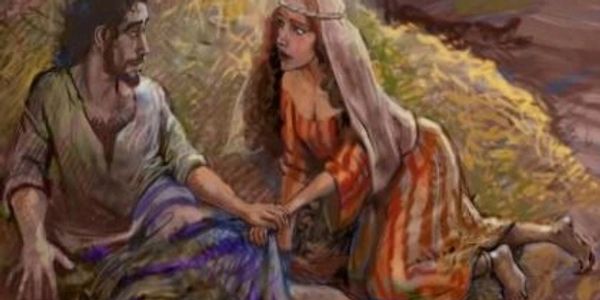
Listen to the Truth

The Truth About Ruth

“Don’t be afraid, my daughter. I will do whatever you say. The whole town knows that you are a woman who has strength of character.” (Ruth 3:11 God’s Word translation)

Virtuous, Determined or Both

Concerning Jesus Our Lord

Jesus Emptied Himself

 Here we have a clear explanation that Jesus became a man like us. For he relied on God for everything he did. This would include his healings, raising the dead, casting out demons and more.

Jesus Came by Water and Blood

 Jesus entered this world as a man relying on God for all he did. For he was born as a baby through the virgin Mary. And when he became a man, he was baptized and the Spirit of God came upon him. Then he was led by the Spirit.

Jesus Suffered in Hell

 This video clearly shows that Jesus did suffer in hell on our behalf. So please watch this video and learn from it. 

Jesus Became Sin for Us

 Jesus became a sin offering for us by taking on the sins of the would upon himself. This he did through beatings, whippings, being nailed to a wooden cross, and last of all spending three days and nights of torment in hell.

Jesus Suffered in Hell on Our Behalf

 When Jesus said, "It is finished," He was showing the world that His mission on earth was completed. For Jesus said earlier: "And this is life eternal, that they might know thee the only true God, and Jesus Christ, whom thou hast sent. I have glorified thee on the earth: I have finished the work which thou gavest me to do." (John 17:3-4 KJV) However, he still had to suffer a sinner's death to fully pay for all our sins. And that included not only his death on a cross, but his three days and nights in hell as well.

Did Jesus Suffer in Hell?

 When Jesus said, "It is finished", His blood was shed for the atonement of sins and the new covenant was ratified. So salvation was now available, but He had to suffer in Hell to pay the penalty for the second death and be resurrected after the third day. 


Copyright © 2026 Word4Today - All Rights Reserved.

Powered by

This website uses cookies.

We use cookies to analyze website traffic and optimize your website experience. By accepting our use of cookies, your data will be aggregated with all other user data.

Accept